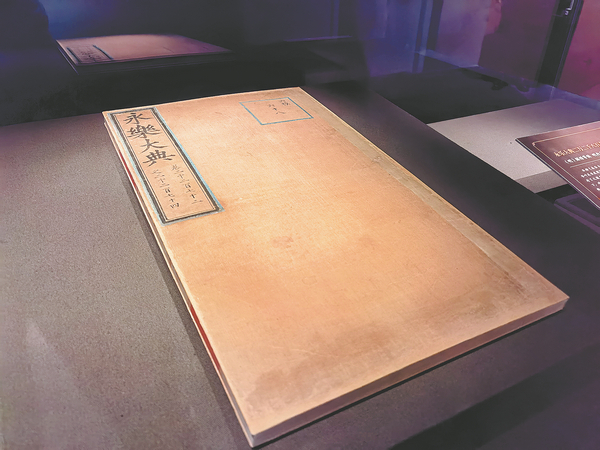
Yongle Dadian
Overview
Yongle Dadian, also known as the Yongle Encyclopedia, is considered one of the largest paper-based general encyclopedias in history. Commissioned by Emperor Yongle of the Ming Dynasty (1368–1644) in 1403, the Yongle Dadian was completed in 1408. The encyclopedia initially consisted of 22,937 volumes contained within 11,095 books, encompassing an estimated 370 million Chinese characters. This monumental work was a reflection of the Ming Dynasty's confidence and power, serving both as a compendium of knowledge and an expression of Emperor Yongle's authority.
Compilation and Structure
The compilation of Yongle Dadian involved more than 2,000 scholars and scribes who collected and transcribed texts from over 7,000 pre-existing books. The encyclopedia was unique in its approach, meticulously organizing information in a manner akin to a dictionary. It employed a leishu format, where entries were categorized according to themes and the Chinese phonetic system. Each entry began with a Chinese character, followed by associated information, including illustrations, phonetic notations, and historical contexts. This method allowed for comprehensive coverage of diverse subjects such as literature, astronomy, medicine, agriculture, and more.
Historical Significance
Yongle Dadian was not merely a collection of ancient texts but an anthology that preserved innumerable works which might have otherwise been lost. It served as a valuable reference for scholars over centuries, enabling the retrieval and preservation of ancient knowledge. The encyclopedia also played a role in validating historical accounts, such as Marco Polo's travels in China, through cross-references found within its volumes.
Preservation and Challenges
Throughout its history, Yongle Dadian faced numerous challenges, including destruction during wars and looting. The original encyclopedia was lost, and only the hand-transcribed duplicate commissioned during Emperor Jiajing's reign in the 16th century survived until the 19th century. Unfortunately, the majority of these volumes were either destroyed or lost due to social upheavals and fires. Today, only about 400 volumes of the duplicate survive, making them precious cultural artifacts.
Modern Efforts and Repatriation
Efforts have been made to recover and preserve the surviving volumes of Yongle Dadian. Institutions like the National Library of China have played crucial roles in these efforts. Some volumes have been returned to China through international cooperation and cultural heritage preservation initiatives. Digitization projects have also been undertaken to create a comprehensive database, ensuring broader access and study of these ancient texts. Additionally, the Yongle Encyclopedia Research Center was established to promote the study and conservation of this monumental work, highlighting its cultural significance in a modern context.
Cultural Impact
Yongle Dadian continues to inspire interest in Chinese classical documents and history. Exhibitions showcasing the volumes and related artifacts are organized to educate the public and foster appreciation for this extraordinary work. The encyclopedia's legacy persists not only as a repository of ancient knowledge but as a testament to the scholarly and cultural achievements of the Ming Dynasty. Article reference1. Book restorers keep ancient treasures alive. chinadaily.com.cn. 20232. Copies of Ming-era encyclopedia on show. chinadaily.com.cn. 2018Photo Gallery(9 pictures)CategoriesLiteratureTagChinese Classical LiteratureAncient Chinese HistoryClassics of Chinese StudiesRelatedYongle Period of the Ming DynastyYongle EncyclopediaCatalogue1. Overview2. Compilation and Structure3. Historical Significance4. Preservation and Challenges5. Modern Efforts and Repatriation6. Cultural Impact- - - []








